The Hook
The US House panel’s $95 billion plan is the cleanest snapshot of modern fiscal politics: urgency makes the price tag sound like a rounding error. Reuters reported the proposal on July 15 as a defense funding measure carrying portions of the administration’s voter-identification bill. It is a proposal, not enacted spending. That distinction matters to taxpayers, markets, and anyone still pretending budget language is a receipt.
The Data
- United States: proposed $95B House defense-linked package (Reuters, July 15).
- United Kingdom: government released July public-spending statistics; British Steel entered public ownership this week to protect a “vital” supply, with the fiscal cost not stated in the source reporting.
- United Kingdom / private capital: TSMC pledged another $100B for US production, taking its stated total US commitment to $265B (BBC, July 16). This is corporate capital, not an appropriation; public incentives and conditions require separate scrutiny.
- North Carolina: the new state budget directs $1.6B to projects, according to local reporting. It is a state-level example, not a federal total.
- France: an additional €6.287B in defense spending was reported before the NATO summit (The Corner.eu, July 10).
Amounts remain in their reported currencies. They are not added or converted: no defensible exchange-rate comparison is needed to make the accountability point.
The Analysis
Governments are excellent at turning a spending announcement into a moral test. Oppose the package and you are accused of opposing security, jobs, steel, or industrial resilience. But the treasury does not accept moral symbolism as payment. It accepts taxes, borrowing, inflation, or a smaller program elsewhere.
The $95 billion US proposal deserves two separate audits. First: does the defense component buy capability that can be delivered on time, or does it mainly enlarge the procurement pipeline? Second: why is a voter-ID provision riding in the same vehicle? Bundling makes a vote look like a choice between national security and political obstruction. It is also a convenient way to make fiscal scrutiny sound unserious.
Britain’s steel nationalization poses the inverse problem. Strategic capacity can have option value during a crisis, but public ownership does not repeal weak demand, high energy costs, or the discipline imposed by a balance sheet. If the state is taking the downside, it should publish the purchase price, operating support, milestones, and exit test. “Vital” is a policy argument, not a cost-benefit analysis.
TSMC’s $100 billion expansion pledge is a reminder that private investment can be enormous without being free of public risk. Tax credits, grants, infrastructure, and guaranteed demand can quietly convert a corporate announcement into a taxpayer-backed commitment. The right question is not whether the factory sounds impressive. It is how many public dollars per durable job, what happens if the forecast misses, and whether the subsidy survives competition from the next favored industry.
This week’s lesson is not that every dollar is waste. It is that every announced dollar creates an opportunity-cost claim. Until governments publish the counterfactual, the financing path, and the failure conditions, “investment” is often just spending wearing a hard hat.
Visual Insight
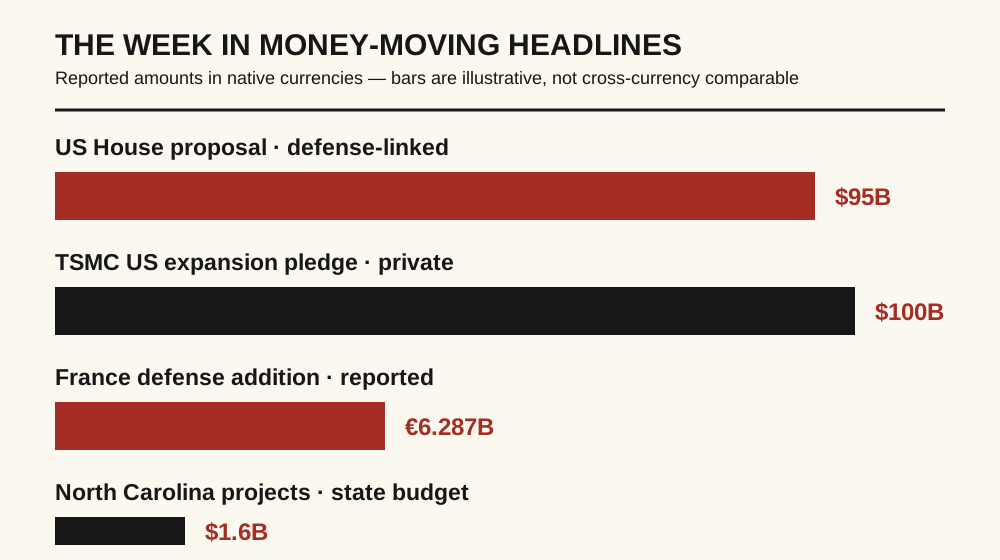
Reported amounts, native currencies; proposals and private commitments are distinguished from enacted appropriations. No cross-currency ranking is implied.